

Cost and management accounting are essential components of the financial framework that underpins effective business operations. While traditional financial accounting focuses on the historical performance of a company, cost and management accounting delve deeper into the intricacies of cost behavior, resource allocation, and operational efficiency. This branch of accounting provides managers with the necessary tools to make informed decisions that can significantly impact the profitability and sustainability of an organization.
By analyzing costs associated with production, services, and overheads, businesses can identify areas for improvement and develop strategies that enhance their competitive edge. The evolution of cost and management accounting has been influenced by various factors, including globalization, technological advancements, and changing market dynamics. As businesses face increasing pressure to optimize their operations and reduce costs, the role of management accountants has expanded beyond mere number-crunching.

They are now strategic partners who contribute to the formulation of business strategies, risk management, and performance evaluation. This shift underscores the importance of understanding cost structures and the need for continuous improvement in business processes.
Key Takeaways
- Cost and management accounting are essential for tracking and controlling business expenses.
- Identifying cost drivers helps implement effective cost-saving strategies.
- Management accounting techniques enhance informed decision-making.
- Performance measurement systems and cost analysis aid in monitoring and improving efficiency.
- Integrating technology and automation streamlines processes and reduces waste.
Understanding the Importance of Efficiency in Business Operations

Efficiency in business operations is a critical determinant of success in today’s fast-paced and competitive environment. It refers to the ability of an organization to deliver products or services using the least amount of resources while maximizing output. High efficiency not only leads to cost savings but also enhances customer satisfaction, as businesses can respond more swiftly to market demands.
For instance, a manufacturing company that streamlines its production processes can reduce lead times, minimize inventory costs, and ultimately deliver products to customers faster than its competitors. Moreover, efficiency is closely linked to profitability. When a company operates efficiently, it can lower its operational costs, which directly impacts its bottom line.
For example, a retail business that optimizes its supply chain management can reduce excess stock and improve cash flow. This not only allows for better allocation of resources but also enables the company to invest in growth opportunities. In this context, understanding efficiency is not merely about cutting costs; it is about creating value through smarter resource utilization and strategic planning.
Identifying Cost Drivers and Implementing Cost-Effective Measures
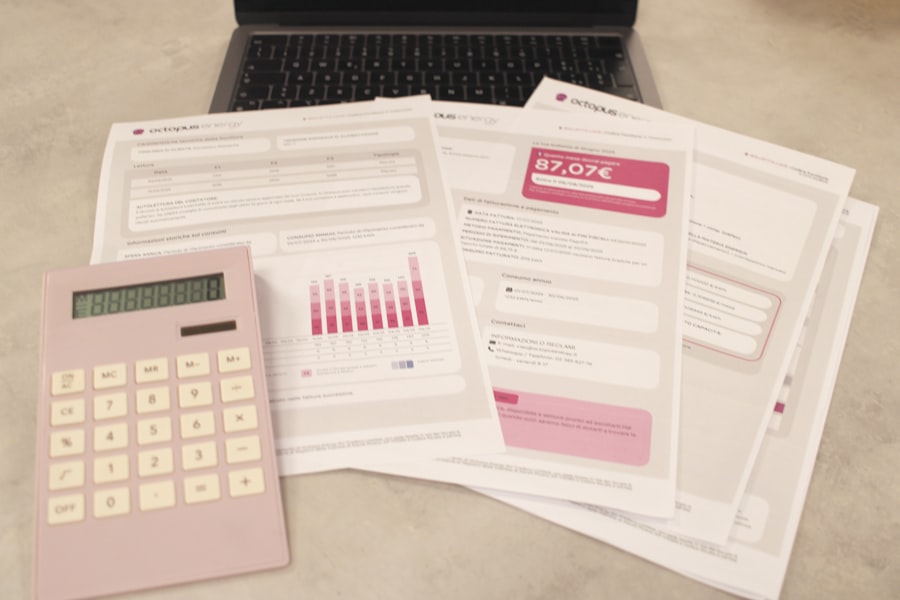
Identifying cost drivers is a fundamental aspect of cost management that allows businesses to understand what influences their expenses. Cost drivers are factors that cause changes in the cost of an activity or process. For instance, in a manufacturing setting, the number of units produced can be a significant cost driver affecting direct materials, labor, and overhead costs.
By analyzing these drivers, organizations can pinpoint areas where they can implement cost-effective measures to enhance profitability. Once cost drivers are identified, businesses can adopt various strategies to manage them effectively. For example, a company may choose to invest in training programs for employees to improve productivity and reduce labor costs associated with errors or inefficiencies.
Additionally, implementing just-in-time inventory systems can help minimize holding costs by ensuring that materials arrive only as they are needed in the production process. Such proactive measures not only lead to immediate cost savings but also foster a culture of continuous improvement within the organization.
Utilizing Management Accounting Techniques to Improve Decision Making
Management accounting techniques play a pivotal role in enhancing decision-making processes within organizations. Techniques such as budgeting, variance analysis, and activity-based costing provide managers with valuable insights into financial performance and operational efficiency. For instance, budgeting allows businesses to set financial targets and allocate resources effectively, while variance analysis helps identify discrepancies between planned and actual performance, enabling timely corrective actions.
Activity-based costing (ABC) is particularly noteworthy as it allocates overhead costs based on actual activities that drive costs rather than using arbitrary allocation methods. This technique provides a more accurate picture of product profitability and helps managers make informed pricing decisions. For example, a company that produces multiple products may discover through ABC that one product line is significantly less profitable than others due to high overhead costs associated with its production process.
Armed with this information, management can decide whether to discontinue the unprofitable line or implement changes to improve its cost structure.
Streamlining Processes and Reducing Wastage through Cost Analysis
| Metric | Description | Example Value | Unit |
|---|---|---|---|
| Direct Material Cost | Cost of raw materials directly used in production | 150,000 | Currency Units |
| Direct Labor Cost | Wages paid to workers directly involved in manufacturing | 80,000 | Currency Units |
| Manufacturing Overhead | Indirect costs related to production (e.g., utilities, depreciation) | 45,000 | Currency Units |
| Cost of Goods Manufactured (COGM) | Total production cost for goods completed during the period | 275,000 | Currency Units |
| Variable Cost per Unit | Cost that varies with production volume per unit | 25 | Currency Units |
| Fixed Cost | Costs that remain constant regardless of production volume | 60,000 | Currency Units |
| Break-even Sales Volume | Sales volume at which total revenue equals total costs | 4,000 | Units |
| Contribution Margin Ratio | Percentage of sales contributing to fixed costs and profit | 40 | Percent |
| Return on Investment (ROI) | Profitability measure relative to invested capital | 15 | Percent |
| Budget Variance | Difference between budgeted and actual costs | -5,000 | Currency Units |
Cost analysis is a powerful tool for streamlining processes and reducing wastage within an organization. By examining every aspect of production or service delivery, businesses can identify inefficiencies that lead to unnecessary expenditures. For instance, a service-oriented company may conduct a thorough analysis of its workflow to uncover bottlenecks that slow down service delivery.
By addressing these inefficiencies—whether through process reengineering or employee training—the company can enhance its service quality while reducing operational costs. In manufacturing environments, lean principles often come into play when conducting cost analysis. Lean manufacturing focuses on eliminating waste—defined as any activity that does not add value to the product or service.
By applying lean methodologies, companies can optimize their production processes, reduce cycle times, and minimize inventory levels. For example, a car manufacturer might implement just-in-time production techniques to ensure that parts arrive precisely when needed on the assembly line, thereby reducing excess inventory and associated carrying costs.
Implementing Performance Measurement Systems to Monitor Efficiency

Performance measurement systems are vital for monitoring efficiency and ensuring that organizations remain aligned with their strategic objectives. These systems provide managers with key performance indicators (KPIs) that track various aspects of operational performance, such as productivity rates, cost per unit produced, and customer satisfaction levels. By regularly reviewing these metrics, businesses can assess their progress toward achieving efficiency goals and make data-driven decisions.
For instance, a logistics company might implement a performance measurement system that tracks delivery times against established benchmarks. If the data reveals that certain routes consistently exceed delivery time targets, management can investigate the underlying causes—be it traffic patterns or inefficient routing—and take corrective action. Additionally, performance measurement systems facilitate accountability within teams by establishing clear expectations and enabling employees to understand how their contributions impact overall efficiency.
Integrating Technology and Automation for Improved Efficiency
The integration of technology and automation has revolutionized the landscape of cost and management accounting by enhancing operational efficiency across various sectors. Advanced software solutions enable organizations to automate routine accounting tasks such as data entry, invoicing, and financial reporting. This not only reduces the likelihood of human error but also frees up valuable time for accountants to focus on strategic analysis rather than mundane tasks.
Moreover, technologies such as artificial intelligence (AI) and machine learning are increasingly being utilized to analyze vast amounts of data quickly and accurately. For example, predictive analytics can help businesses forecast future trends based on historical data, allowing them to make proactive decisions regarding inventory management or resource allocation. In manufacturing settings, automation technologies such as robotics can streamline production processes by performing repetitive tasks with precision and speed, ultimately leading to reduced labor costs and increased output.
The Impact of Cost and Management Accounting on Business Efficiency
The impact of cost and management accounting on business efficiency cannot be overstated; it serves as a cornerstone for informed decision-making and strategic planning within organizations. By providing insights into cost structures and operational performance, these accounting practices empower managers to identify inefficiencies and implement targeted improvements. As businesses continue to navigate an increasingly complex economic landscape characterized by rapid technological advancements and shifting consumer preferences, the role of cost and management accounting will only grow in significance.
In essence, effective cost management is not merely about reducing expenses; it is about fostering a culture of continuous improvement that drives innovation and enhances competitiveness. Organizations that embrace these principles will be better positioned to adapt to changing market conditions while maximizing their resources for sustainable growth. As such, investing in robust cost and management accounting practices is essential for any business seeking long-term success in today’s dynamic environment.
